Nationwide Delivery!

Hybrid Solar Power System
A Hybrid Solar Power System combines the best of both worlds by integrating solar power with battery storage and connection to the main electricity grid.
This system offers flexibility, reliability, and efficiency, making it an ideal solution for both residential and commercial applications.
Key Components
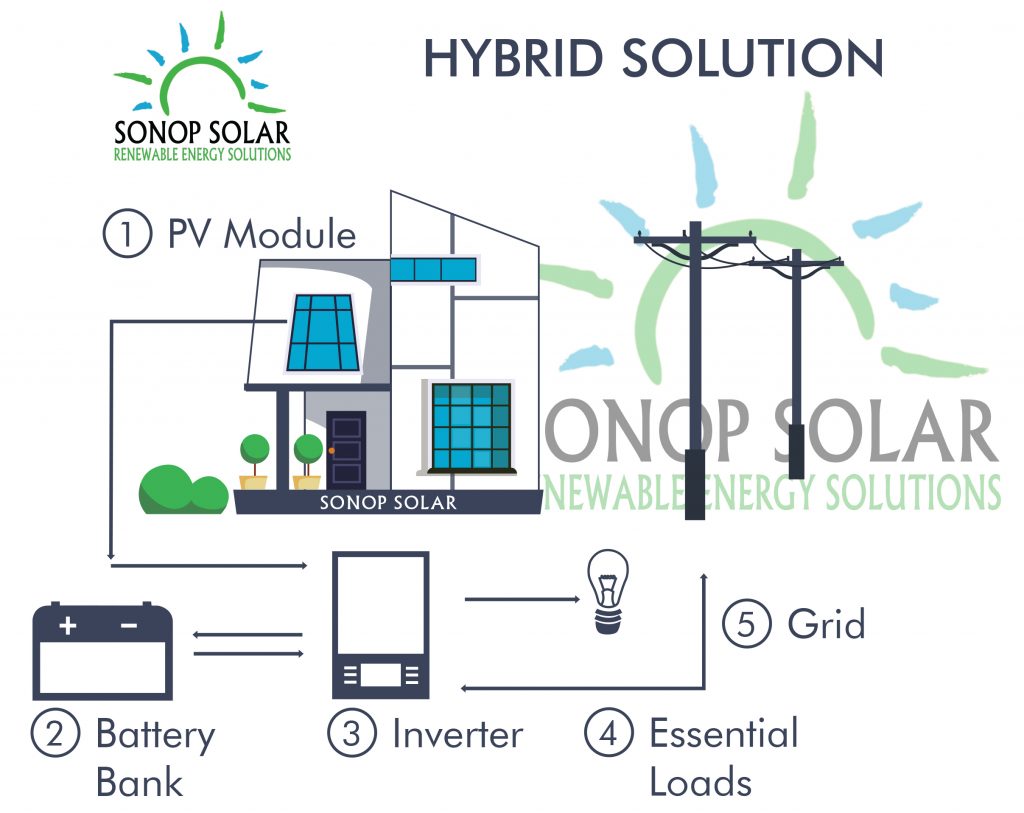
How it works
1
Solar Panels Generate DC Power: The sun shines onto the solar panels, generating direct current (DC) electricity.
2
Energy Storage in Batteries: Excess energy is stored in the battery bank for later use.
3
Inverter Converts DC to AC: The inverter converts the DC electricity into AC electricity, suitable for household use.
4
Power Supply to Home: The AC electricity is used to power your household appliances and electronics.
5
Grid Interaction: When solar and battery power are insufficient, the system draws power from the grid. Any surplus energy can be sent back to the grid, potentially earning you credits.
Additional Features
Hybrid Operation
Hybrid systems can run on solar power, mains power, or both, with battery backup for power outages or periods of no sun.
Flexible Energy Use
These systems combine the benefits of grid-tied and off-grid systems, providing utility backup power with extra battery storage.
Non-Grid Feed-In Option
For backup and self-consumption, these systems can be connected to PV modules, utility or generator, batteries, and the load without the need for a charge controller/regulator.
Example System
5 kVA Hybrid System
- 5 kVA Hybrid Inverter
- 12 x 400W PV Modules (4.8 kWp total)
- 5 x 2.4kWh Lithium Batteries (12kWh total) rated to discharge to 80% = 9.6kWh usable
- Combiner Box, Fuses, Breakers, Cables, Railings, Connectors
Backup Power
9.6kWh discharging at 500W = approximately 19 hours of backup power
Benefits
